Excavators are essential machines used in construction, mining, demolition, road development, and earthmoving projects. Their performance depends on the reliability of various mechanical, hydraulic, and electronic components. When a component fails, choosing the right excavator spare parts is essential to restore machine performance, minimize downtime, and control maintenance costs.
Selecting an unsuitable replacement part can lead to installation problems, reduced efficiency, additional expenses, and further equipment damage. Therefore, equipment owners, maintenance professionals, and fleet managers should understand how to identify compatible components and choose a reliable spare parts supplier.
At Marginal Hydraulic, we support excavator maintenance requirements with hydraulic components, spare parts, and related technical services.
1. Identify Your Excavator Make and Model
The first step in choosing the correct excavator spare parts is identifying your machine’s manufacturer, model, and configuration.
Even excavators from the same manufacturer may use different components depending on their production year, serial number, engine type, and equipment configuration.
Before ordering replacement parts, collect the following information:
- Excavator manufacturer and model
- Machine serial number
- Original equipment manufacturer (OEM) part number
- Component identification or nameplate details
- Photographs of the existing component
- Relevant engine or hydraulic system specifications
Providing accurate machine information helps the supplier verify compatibility and reduces the risk of ordering an incorrect part.
2. Understand the Different Types of Excavator Spare Parts
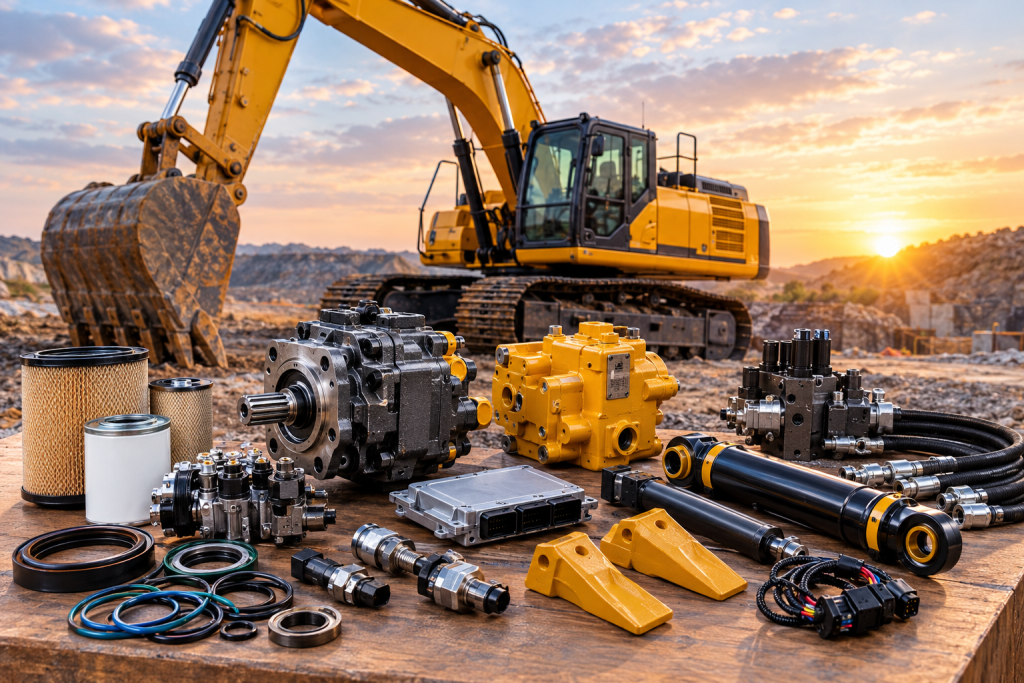
Excavators contain several types of components that perform specific functions. Understanding these categories makes it easier to identify the parts required for maintenance or repair.
Hydraulic Pumps
Hydraulic pumps supply pressurized hydraulic fluid to operate various machine functions, including boom movement, arm operation, bucket control, and travel, depending on the hydraulic system design.
A damaged or worn hydraulic pump can cause slow operation, reduced digging performance, unusual noise, and excessive heat.
When selecting a replacement pump, verify its part number, displacement, pressure rating, mounting configuration, shaft dimensions, and control specifications.
Hydraulic Motors and Valves
Hydraulic motors convert hydraulic energy into mechanical movement, while hydraulic valves control the direction and flow of hydraulic fluid.
Choosing the correct motor or valve requires checking the original part number, operating specifications, connections, and compatibility with the machine’s hydraulic system.
Electronic Controllers and ECUs
Electronic control units (ECUs) and controllers manage designated engine, hydraulic, and machine functions.
Before purchasing a controller, confirm the part number, machine configuration, connector type, and software or programming requirements. Some replacement units may require configuration before installation.
Fuel Pumps and Injectors
Fuel pumps and injectors support fuel delivery and combustion in diesel-powered excavators.
Incorrect components can affect engine performance, fuel efficiency, starting, and emissions. Always verify compatibility with the engine model and applicable specifications.
Sensors, Solenoids, and Wiring Harnesses
Sensors monitor operating conditions, solenoids control designated functions, and wiring harnesses carry electrical signals throughout the machine.
When replacing these parts, check connector types, electrical specifications, part numbers, and the fault diagnosis before ordering.
Hydraulic Seal Kits
Hydraulic seal kits contain sealing components used in suitable maintenance and repair applications.
Correct seal dimensions, material compatibility, pressure ratings, and operating temperatures are important for effective sealing and reliable performance.
3. Always Check the Original Part Number
The original part number is one of the most useful references when purchasing excavator spare parts.
However, similar-looking components are not necessarily interchangeable. Differences in dimensions, specifications, connections, or revisions may affect compatibility.
Before placing an order:
- Locate the part number on the original component or consult the parts catalogue.
- Confirm that the number matches the machine’s model and serial number.
- Check whether an approved replacement or superseded part number exists.
- Verify specifications with the supplier.
- Keep the purchase documentation for future maintenance reference.
If the part number is missing or unreadable, provide clear photographs and the machine’s identification details to help the supplier identify the correct component.
4. Choose Between New, Used, and Remanufactured Parts
Excavator spare parts may be available in different conditions. The appropriate choice depends on the component, maintenance budget, machine usage, and expected service life.
New Spare Parts
New parts may be suitable when reliability, component condition, and warranty support are priorities.
Before purchasing, verify the supplier, specifications, compatibility, and warranty terms.
Used Spare Parts
Used components may reduce initial purchase costs, but their service history and remaining useful life can be uncertain.
Ask about inspection results, operating history, visible wear, testing, and any applicable warranty.
Remanufactured Components
Remanufactured components undergo a restoration process that may include disassembly, inspection, replacement of worn parts, reassembly, and performance testing.
The scope of work varies by supplier and component. Ask which parts have been replaced, what testing has been completed, and what warranty is provided.
Comparing the total expected cost rather than only the initial purchase price helps you make a more informed decision.
5. Evaluate the Quality and Reliability of the Supplier
Choosing the right excavator spare parts supplier is just as important as identifying the correct component.
A dependable supplier should help you verify compatibility, understand product condition, and obtain relevant technical information.
Consider these factors before purchasing:
- Experience with excavator and hydraulic components
- Ability to identify parts using model and part numbers
- Clear information about component condition
- Product inspection and testing procedures
- Availability and estimated delivery time
- Warranty terms and after-sales support
- Transparent pricing and communication
Avoid selecting a component based on price alone. A part that fails prematurely can increase labour costs, cause additional damage, and lead to expensive equipment downtime.
6. Consider the Total Cost of Ownership
The cost of an excavator spare part includes more than its purchase price.
When comparing available options, consider:
- Initial component cost
- Shipping and delivery charges
- Installation and labour expenses
- Required programming or calibration
- Expected service life
- Warranty coverage
- Potential downtime and lost productivity
For example, a less expensive component may not be the best choice if it has uncertain compatibility or requires frequent replacement. A suitable, properly tested component may provide better long-term value.
The objective is to find a replacement that meets the machine’s technical requirements while keeping maintenance costs under control.
7. Keep Critical Spare Parts Available
For businesses operating multiple excavators or working on demanding project schedules, an unplanned component failure can disrupt operations.
Maintaining an inventory of selected critical spare parts can help reduce delays.
Your inventory planning should consider:
- Machine usage and operating hours
- Previous breakdowns and maintenance records
- Component failure history
- Supplier lead times
- Availability of alternative parts
- Storage requirements and component shelf life
Commonly replaced service items and critical components may deserve priority, but inventory decisions should be based on actual equipment requirements rather than guesswork.
8. Follow a Preventive Maintenance Schedule
Correct replacement parts are only one part of maintaining excavator performance. Regular preventive maintenance also helps reduce premature component failure.
Follow the manufacturer’s recommended maintenance schedule and inspect important systems regularly.
Recommended practices include:
- Checking hydraulic oil levels and condition
- Inspecting hydraulic hoses, seals, and connections
- Replacing filters at the recommended intervals
- Monitoring unusual noises and vibrations
- Checking for oil and fuel leaks
- Inspecting electrical connections and sensors
- Recording repairs and component replacements
Early identification of developing problems can help prevent minor faults from turning into major repairs.
9. Why Choose Marginal Hydraulic for Excavator Spare Parts?
Finding the right component requires accurate identification, appropriate specifications, and reliable technical information.
Marginal Hydraulic provides access to excavator spare parts and hydraulic components for equipment maintenance and repair requirements. Its listed product categories include hydraulic pumps, motors, valves, controllers, sensors, fuel system components, and seal kits.
The company also lists hydraulic testing, repair, and remanufacturing services for relevant components.
When enquiring about a replacement part, share your machine model, serial number, original part number, and photographs where possible. This information helps clarify your requirements and supports a more accurate compatibility assessment.